Summarize This Guide with AI
The page title, key topics and source link are passed to your selected tool in a prepared prompt.
The prostate can be involved in several very different conditions, including benign prostatic enlargement, bacterial prostatitis, chronic pelvic pain syndromes and prostate cancer. These conditions can share urinary symptoms, but they are not interchangeable. A weak stream or nocturia does not by itself diagnose an enlarged prostate, and urinary symptoms do not by themselves mean prostate cancer. Assessment focuses on the pattern of symptoms, examination, urine testing and selected investigations such as PSA, flow testing, ultrasound, MRI or biopsy when clinically justified.
What is the prostate?
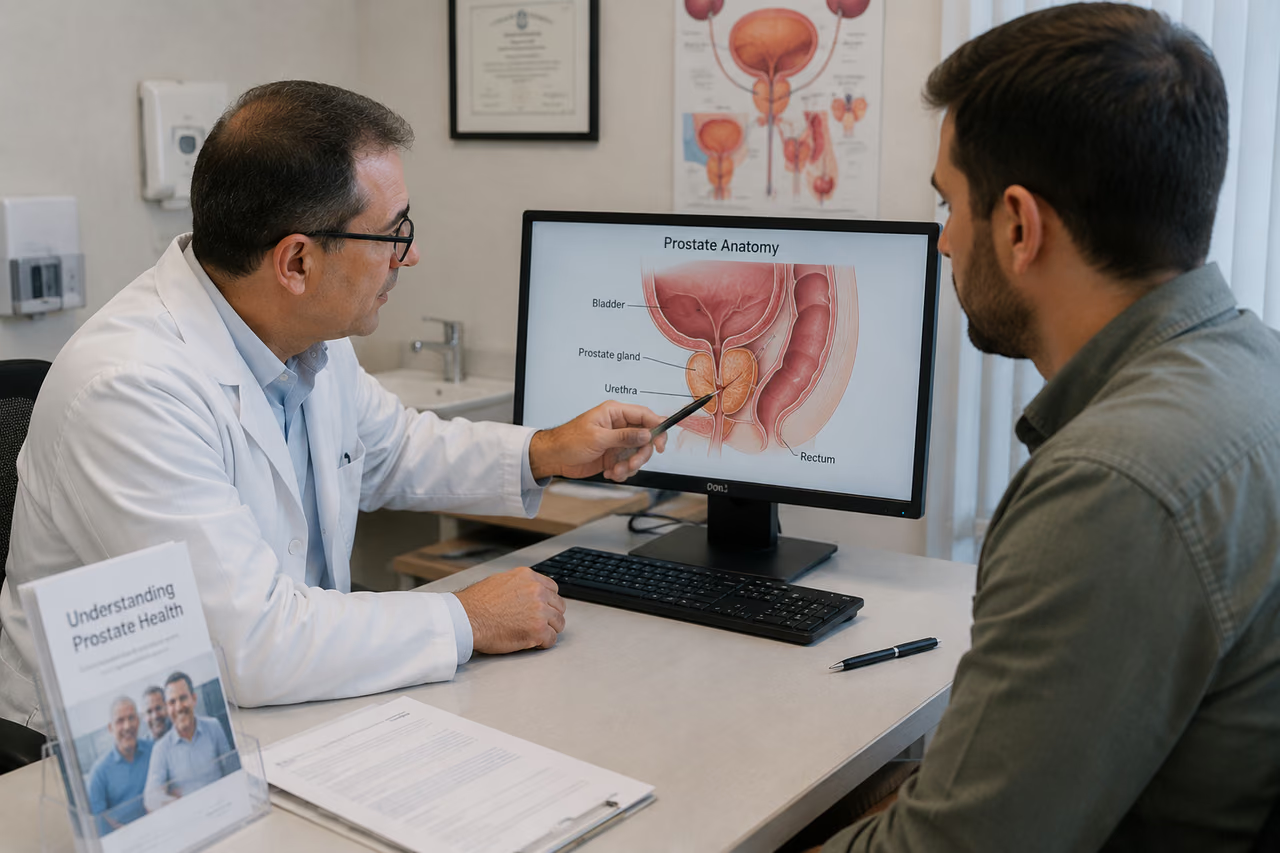
The prostate is a gland situated below the bladder and around the first part of the urethra. It contributes fluid to semen and is involved in male reproductive physiology.
As men age, benign enlargement becomes more common, but prostate size alone does not determine symptoms. Urinary symptoms can also arise from the bladder, urethra, pelvic floor, neurological conditions, medicines and other causes.
What are the main categories of prostate disease?
Benign prostatic enlargement and obstruction
Benign prostatic enlargement (BPE) describes non-cancerous enlargement of the gland. Benign prostatic obstruction (BPO) describes obstruction of urinary outflow attributed to benign prostate-related mechanisms. The term benign prostatic hyperplasia (BPH) is technically a histological diagnosis, although it is often used more broadly in everyday clinical language.
A large prostate does not always cause troublesome lower urinary tract symptoms, and a relatively small prostate can still be associated with symptoms.
Prostatitis and chronic pelvic pain
Acute and chronic bacterial prostatitis involve infection and are different from chronic pelvic pain syndromes without proven infection.
Acute bacterial prostatitis can present with fever, malaise, pelvic or perineal pain and urinary symptoms. Chronic bacterial prostatitis has a different time course and diagnostic approach.
Persistent pelvic or prostate-region pain without proven infection may fit a chronic pelvic pain syndrome rather than ongoing bacterial infection. This distinction matters because repeated empirical antibiotics are not appropriate for every chronic pelvic pain presentation.
Prostate cancer
Prostate cancer is a malignant disease and follows a separate diagnostic pathway. It may be detected through PSA-based risk assessment, abnormal digital rectal examination, MRI and biopsy depending on the individual situation.
Many prostate cancers cause no urinary symptoms at an early stage. Conversely, urinary symptoms are common in men who do not have prostate cancer.
What symptoms can be associated with prostate or lower urinary tract problems?
Lower urinary tract symptoms are usually grouped into storage, voiding and post-micturition symptoms.
Voiding symptoms
These can include:
- weak urinary stream;
- intermittency;
- hesitancy;
- straining;
- prolonged urination.
Storage symptoms
These can include:
- urinary frequency;
- urgency;
- waking at night to urinate;
- urgency urinary incontinence.
Pain and other symptoms
Depending on the condition, there may also be:
- pelvic, perineal or penile pain;
- painful urination;
- painful ejaculation;
- fever or systemic illness in acute infection;
- visible blood in the urine;
- urinary retention.
The symptom pattern helps guide the evaluation but does not establish the cause by itself.
Do urinary symptoms mean prostate cancer?
No. Lower urinary tract symptoms are common and are often related to benign prostate enlargement, bladder dysfunction, infection, urethral disease or other causes.
Prostate cancer may be asymptomatic, especially when localized. For this reason, the presence or absence of urinary symptoms is not a reliable cancer screening test.
Cancer risk assessment instead considers factors such as age, family history, genetic risk, PSA, digital rectal examination and, where indicated, prostate MRI and biopsy.
What information matters during prostate assessment?
Relevant history may include:
- which urinary symptoms are present and how bothersome they are;
- symptom duration and progression;
- visible or microscopic blood in urine;
- urinary infections;
- episodes of retention;
- pelvic pain, fever or painful ejaculation;
- current medicines, including drugs that can affect urination;
- neurological or metabolic disease;
- previous prostate or urethral procedures;
- previous PSA values and imaging;
- family history of prostate cancer;
- known BRCA2 or other relevant genetic risk where applicable.
Validated symptom scores and a bladder diary can sometimes help quantify the problem.
What is a digital rectal examination?
A digital rectal examination (DRE) allows the clinician to assess the posterior surface of the prostate for approximate size, texture, tenderness and focal abnormality.
DRE has limitations. It is not an accurate measurement of prostate volume and a normal DRE does not rule out prostate cancer. An abnormal or suspicious DRE may, however, change the need for further evaluation.
DRE is also not required in exactly the same way for every urology complaint; its relevance depends on the clinical question.
What is a PSA test?
Prostate-specific antigen (PSA) is a protein produced by prostate tissue and measured in blood.
PSA is prostate-specific but not cancer-specific. It can rise because of:
- prostate cancer;
- benign prostate enlargement;
- prostatitis or urinary infection;
- recent urinary retention or some prostate procedures;
- other individual factors.
A high PSA is therefore not a cancer diagnosis, while a low PSA does not make prostate cancer impossible.
Does every man need a PSA test?
No. PSA testing should be based on an informed discussion of potential benefits, limitations and downstream consequences.
Current EAU prostate-cancer guidance supports risk-adapted early detection rather than a single universal testing rule. Age, family history, ancestry, BRCA2 status, life expectancy and the clinical reason for testing all matter.
In men with lower urinary tract symptoms, EAU guidance recommends PSA when a prostate-cancer diagnosis would change management or when PSA will assist treatment decision-making.
What happens if PSA is elevated?
An elevated PSA is interpreted in context rather than triggering an automatic biopsy.
Depending on the level, symptoms and examination, the pathway may include:
- checking for transient factors that could affect the result;
- repeating PSA under appropriate conditions;
- risk calculators or additional biomarkers in selected settings;
- prostate MRI;
- biopsy when the estimated risk of clinically significant cancer justifies it.
Current EAU guidance supports repeating PSA before further investigation in selected asymptomatic men with a moderately elevated initial value.
What other tests may be useful?
Urinalysis
Urinalysis can identify infection, blood, glucose and other findings that change the differential diagnosis. It is part of the routine assessment of male lower urinary tract symptoms.
Kidney-function testing
Creatinine or estimated glomerular filtration rate may be appropriate when renal impairment is suspected, hydronephrosis is present, retention is a concern or invasive treatment is being considered.
Uroflowmetry
Uroflowmetry measures urinary flow. A low maximum flow rate does not identify one specific cause; it can occur with outlet obstruction, weak bladder contraction or an under-filled bladder.
Post-void residual measurement
Bladder ultrasound can estimate urine left after voiding. A raised residual is not automatically proof of prostate obstruction because poor bladder contractility can also produce retention.
Ultrasound
Ultrasound may assess bladder, kidneys, residual urine and prostate volume depending on the clinical question. It is not synonymous with cancer diagnosis.
Prostate MRI
MRI is now central to prostate-cancer risk assessment when cancer is suspected. It can identify lesions that may need targeted biopsy and contributes to staging, but a negative MRI does not make cancer risk zero.
Prostate biopsy
Histopathology from biopsy is generally required to confirm prostate cancer. Current diagnostic pathways usually combine PSA, examination, MRI and individual risk before deciding whether biopsy is necessary.
Cystoscopy and urodynamics
These are not routine tests for every man with prostate or urinary symptoms. They are used selectively when haematuria, urethral disease, previous procedures, unexplained symptoms or uncertainty about bladder/outlet function makes them useful.
How are benign urinary symptoms treated?
Treatment depends on symptom burden, prostate characteristics, progression risk, bladder function, comorbidities and patient preference.
Options can include:
- watchful waiting and behavioural adjustments;
- medication aimed at symptom relief or reducing progression risk in selected men;
- minimally invasive procedures;
- endoscopic or surgical treatment when symptoms, complications or obstruction justify intervention.
The appropriate option cannot be chosen from prostate size alone.
How is prostatitis treated?
Treatment depends on whether there is proven or strongly suspected bacterial infection versus a chronic pelvic pain syndrome.
Acute bacterial prostatitis requires prompt medical assessment and antimicrobial treatment according to infection severity and culture information. Chronic bacterial prostatitis has its own diagnostic criteria and treatment strategy.
Chronic pelvic pain without proven infection often requires a broader multimodal approach. Repeated antibiotic courses should not be assumed to be appropriate simply because pelvic pain is described as “prostatitis”.
How is prostate cancer treated?
Prostate-cancer treatment is determined by cancer grade and stage, PSA, imaging, life expectancy, comorbidity and patient preferences.
Depending on risk category, management may include:
- active surveillance;
- surgery;
- radiotherapy;
- androgen-deprivation therapy;
- systemic therapies for advanced disease;
- combinations of treatments.
A general symptom page cannot determine which option is appropriate for an individual cancer diagnosis.
Can prostate disease affect sexual function?
Yes, but the relationship varies.
Pelvic pain, urinary symptoms and anxiety can affect sexual wellbeing. Some medicines used for urinary symptoms can influence ejaculation or erections, and prostate-cancer treatments may affect erectile, ejaculatory and hormonal function.
The sexual effects of treatment should therefore be discussed before therapy when they are relevant to the patient.
When is urgent assessment needed?
Urgent medical evaluation may be required for:
- complete inability to urinate with painful bladder distension;
- fever, chills and significant urinary symptoms suggesting acute infection;
- severe systemic illness with pelvic or urinary symptoms;
- visible heavy haematuria or clots;
- severe flank pain with fever;
- signs of sepsis.
Acute bacterial prostatitis in a systemically unwell patient should not be managed as a routine outpatient self-care problem.
When should routine urology assessment not be postponed?
Arrange assessment for persistent or worsening lower urinary tract symptoms, recurrent urinary infections, repeated retention, unexplained haematuria, persistent pelvic pain, a concerning PSA trend or known elevated prostate-cancer risk.
See first urology appointment for what an initial assessment may involve.
Medical information note
Prostate problem is not one diagnosis. Benign enlargement, obstruction, bacterial prostatitis, chronic pelvic pain and prostate cancer require different diagnostic pathways and should not be inferred from one symptom or one PSA result.
Sources4 sources
- European Association of Urology. *EAU Guidelines on the Management of Non-neurogenic Male Lower Urinary Tract Symptoms — Diagnostic Evaluation*
- European Association of Urology. *EAU Guidelines on Prostate Cancer — Diagnostic Evaluation*
- European Association of Urology. *EAU Guidelines on Urological Infections — Bacterial Prostatitis*
- European Association of Urology. *EAU Guidelines on Chronic Pelvic Pain*